What Is Fruit Crisp


Fruit crisp is real fruit—it has simply been subjected to a commercial freeze dryer. This machine removes moisture from the fruit using cold temperatures. fruit crisp is completely dry, lightweight, and has a crisp, crumbly texture. As for how it tastes? fruit crisp is "bright and full of the flavor of whatever it is. The process of drying fruits (and other foods) is as old as the sun, but freeze drying uses contemporary technology. Foods placed within a commercial freeze dryer are frozen to sub-zero temperatures. Once frozen, the foods are subjected to vacuum drying using a vacuum pump. The air and water vapor are removed from the processing chamber, which includes removing the water vapor that was once inside the food. The food is then dry enough to store safely at room temperature.


Advantages of Fruit Crisp
 
01/

Nutrient Retention
Fruit crisp preserves fresh fruit’s natural vitamins, minerals, and antioxidants. When you snack on fruit crisp, you get the nutritional benefits without the risk of nutrient loss.

02/

Low In Calories
Fruit crisp is often lower in calories than other snacks, making it a smart choice for those mindful of their calorie intake. It allows you to enjoy a flavorful and satisfying snack without excessive caloric content.

03/

High In Fiber
The fruit crisp process retains the fruit’s fiber content. Fiber is essential for digestive health, promoting satiety and helping to regulate blood sugar levels. Snacking on fruit crisp can contribute to your daily fiber intake.

04/

No Added Sugars
Many commercially available fruit crisps have no added sugars or preservatives. This is a significant advantage for those seeking healthier snack options, as it reduces the intake of added sugars often found in processed snacks.

05/

Convenience And Portability
Fruit crisp is lightweight, non-perishable, and requires no refrigeration. This makes it a convenient on-the-go snack, providing a healthy alternative to less nutritious, processed snacks commonly found in vending machines.

06/

Natural Energy Boost
The natural sugars in fruit crisp provide a quick and natural energy boost. This makes it an excellent choice for a pre-workout snack or a mid-afternoon pick-me-up without the added sugars and artificial ingredients in many energy bars or drinks.


First 12 Last 1/2
Why Choose Us

Our Factory
The intelligent production base covers an area of 20, 000 square meters and is equipped with a 100, 000-grade purification workshop, a well-equipped central laboratory and a multi-functional exhibition hall, focusing on the production and research of dehydrated fruits and vegetables, professional processing equipment, aerospace food technology, freshness locking of raw materials in -18℃ freezer, and 0℃-15℃ fresh storage standard for storage, standardized food production line, intelligent high level cargo shelves, from raw materials to finished products the whole process is guaranteed.


Production Equipment
The company has many automatic production and packaging equipments such as VF dehydration equipment、freeze dryer、automatic stand-up pouch packaging machine、automatic vertical roll film packaging machine、automatic can sealing and labeling machine, etc.


Production Market
Miao Shu Shu fruit and vegetable crisp after years of development, the status in the hearts of consumers gradually increased, and it has a very good reputation in the market. It is a brand with extraordinary potential in the casual food industry in recent years, selling well in Japan、Korea and Southeast Asia, etc.


Our Service
The professional business manager will follow up the whole process,summarize and share the marketing、management、operation、product expertise、company introduction、sales skills and other issues to the customer, full service support from order placement to after-sales. Source manufacturers, stable supply of goods and highly efficient delivery. Cooperation will provide regional protection and channel protection to ensure that the benefits and the only for loyalty merchants. The company has contracted with many large logistics groups to ensure the speed of delivery and high quality after-sales service.


How Does Fruit Crisp Work?


Raw fruits, vegetables are primarily comprised of water, which can be divided into “free” and “bound” water. While free water freezes, bound water doesn’t. In the fruit crisp process, all free water and some bound water must be removed, and free water must remain frozen at all times. In fact, this is the primary difference between freeze- and vacuum-drying — and the most challenging step. The fruit crisp process can be divided into three steps :


Freezing: The product is often frozen under atmospheric pressure. Primary drying: Also known as proper fruit crisp, this is the sublimation step in which frozen free water is removed. Secondary drying: Also known as desorption drying, it’s the drying of products to their desired humidity by removing the remaining bound water. Fruit crisp should be performed in controlled conditions that do not melt the water, seeing that the presence of liquid water may change the product’s composition, shape, and physical properties.


That would likely lead to a significant reduction of the product’s shelf life. Once frozen water is removed via sublimation, the remaining product develops a highly porous structure. However, adding water rehydrates the product again almost immediately.


Fruit Crisp Recipes for Every Season
综合水果酥
冻干杨梅
冻干菠萝块
冻干芒果片

Apple Crisps
Apple-ginger crisp gets "zingy bright flavor" from candied ginger in the topping, and it's pretty easy to riff on. Swap in different apples if you don't have , try it with pears, or go for peaches or nectarines in the summer—you can throw some berries in too, she says. Apples also star in crisp, as "their tartness is delicious with the sweet, crunchy oat-flecked crumb topping. Apple crisp with hazelnuts, features a brandy-spiked homemade caramel sauce and a hazelnut and oat topping. And if you need a gluten-free apple crisp.


Pear Crisps
Pear crisp with polenta-pecan topping can be covered and kept at room temperature for one day, if you want to make it in advance. And in crisp recipe, caramelized pear wedges come together with dried cranberries and a buttery topping. Once it's cooled down a bit, it pairs perfectly with ice cream (as do many crisps), so make sure you have your favorite flavors on hand in your freezer and dig in.


Peach And Other Stone-fruit Crisps
Peach gingersnap crisp only requires seven ingredients: Unsalted butter, peaches, light brown sugar, fresh lemon juice, all-purpose flour, a pinch of salt, and coarsely crushed gingersnaps. (the topping comes together in seconds.) has a recipe for a peach crisp, too, whose brown-butter crumble topping includes three kinds of sugar for maximum flavor: Granulated, turbinado, and dark brown. For a peach-berry combo, try peach and blackberry crisp, which is perfect for summer when peaches and blackberries take center stage. If you have plums, pairs them with ginger (grated, as opposed to candied) for a crisp that comes together in two steps. And for cherries, try these cherry lambic crisps, made with lambic beer, which yield six individual desserts.


Berry Crisps
This mixed berry crisp with combines strawberries, blackberries, blueberries, and raspberries, pairing them with a salty-sweet matzoh topping that's perfect for passover but delicious any time of year. For a spring dessert. Love blueberries? This crisp from combines a blueberry filling (six pints worth of berries!) with a toasted pound cake topping. If blueberries aren't available, feel free to vary the filling with four pounds of mixed stone fruits (four pounds) or berries. The recipe is easygoing—just like your summer should be.


How to Use Fruit Crisp
 

You can buy fruit crisp at many grocery stores (it's often in the same aisle as dehydrated fruits like raisins), but how should you use it? Since fruit crisp contains no water or added sugar, it's ideal for bringing fresh, bright flavors to baked goods without the concern of disturbing the consistency or sweetness of a batter or dough.

Make a powder for frosting, whipped cream, cake batter, and more

In a food processor, pulverize any fruit crisp—strawberries, raspberries, mango, or apples—to make a powder that folds and dissolves effortlessly into cake batter, whipped cream, buttercream frosting, meringues, and more. Sift that same powder over the top of a shaken egg white cocktail, or dust it over popcorn for a sweet-and-salty treat. It is so great for baking because it adds tons of fruit flavor, but no liquid, so you can play with it in recipes that normally would be so hard to make fruity, like cookies。

Add to a syrup for drinks and desserts

For rich, beautifully colored syrups, add any fruit crisp to a small saucepan with equal parts water and granulated white sugar. Bring to a simmer, let reduce, and then strain into jars or glass bottles for an ingredient that is as pretty as it is practical. Drizzle it onto ice cream or yogurt, add to your favorite cocktail or mocktail, use it to sweeten tea, or even to top waffles or french toast.

Use whole

Even when left whole or roughly crumbled, fruit crisp is a fun and unique addition to trail mix or snack mix, breakfast bars, cereal or oatmeal, and much more. First-time users should know that it packs a punch. I'd say start small, recipe developer and food stylist. And adjust according to your taste buds.


Fruit Crisp Vs. Dehydrated Fruit: What's the Difference?

Ever grab an apple or pear from a fruit bowl—only to discover a soft, mushy brown spot on its side? If only there was a better way to enjoy your favorite fruits, without worrying about them spoiling. You're in luck! Freeze dried and dehydrated fruits allow you to savor the sweetness and nutrition density of fresh fruits like apples, blueberries, or strawberries—minus the time constraints. You may notice that dried fruit looks a bit different than fresh fruit. That's because it goes through a drying process that removes the majority of its water. And without moisture for bacteria to feed on, dried fruit has a longer shelf life.


What Is fruit crisp? You may have guessed that the process of freeze-drying fruit requires the assistance of below-freezing temperatures. Once the fruit is frozen and covered in ice, it is then placed into a vacuum chamber. Using freezing temperatures (below -40° F), the ice doesn't have a chance to turn into a liquid. Instead, it transforms into a gas that dissipates from the food, leaving the shape of the fruit intact. In terms of texture, fruit crisp is light, airy, and crunchy. This is due to the fact that the fruit is void of any real moisture, as the process removes up to 98% of its water. What Is Dehydrated Fruit? Drying fruit can be performed in one of two ways: sun drying or machine drying. While freeze drying involves much lower temperatures, drying requires hotter conditions (125° F to 140° F) to effectively remove water from each fruit. Because dehydrated fruit still contains about 20% of its moisture, it has a chewier texture.


Prior to refrigeration, dehydrating food was one of the earliest forms of food preservation. Though certain nutrients are often broken down during the cooking process, dehydrating fruit can help you retain key nutrients and sweetness that you would otherwise lose from excessive heat. Fruits aren't the only ones undergoing dehydration these days. Popular veggies like sweet potatoes and green beans are quickly becoming tasty, on-the-go snacks, too! Finally, both dehydrated (and freeze-dried) fruit contain the same amount of nutrients as fresh fruit, including fiber, vitamins, and minerals. This means fruits that are nutrient rich and have little impact on blood sugar (like blueberries and apples) won't lose their nutritional value in dried form. Just remember to skip any dried fruit options that contain added sugars or other calorie-dense ingredients.


Although freeze dried and dried fruits have a longer shelf life than fresh fruit, they do require proper storage to maintain their quality flavors and textures. It estimated that unopened, fruit crisp has a shelf life of up to 30 years! Once opened, they can last up to one year, if stored under proper conditions. It recommended storing them in a cool, dry place that isn't exposed to direct sunlight, such as a pantry. If you purchased a bag of fruit crisp from your local grocer, be sure to keep it stored in its original air-tight packaging to help preserve its quality. Most dried fruits can be stored in the pantry or refrigerator to extend its freshness. As with fruit crisp, be sure to keep the fruit sealed inside its original air-tight container and left in a cool, dry place that is out of reach from the sun. Looking for more nutrient-dense snack ideas for your pantry?


Explanation for Intense Flavor about Fruit Crisp
 

Removal Of Water Content
The fruit crisp process involves freezing the fruit and then removing the water content through sublimation—transitioning directly from ice to vapor without passing through the liquid phase. This dehydration concentrates the natural sugars present in the fruit.


Preservation Of Volatile Compounds
Many flavor compounds in fruits are volatile, meaning they can evaporate or degrade when exposed to heat or traditional drying methods. Fruit crisp occurs at low temperatures, preserving these volatile compounds and maintaining the original flavor profile of the fruit.


Cellular Structure Preservation
Unlike other drying methods that can alter the cellular structure of fruits, fruit crisp maintains the integrity of the fruit’s cells. This retention of cellular structure contributes to the fruit’s rehydratable quality and intense flavor when consumed.


Quick Rehydration
When you eat freeze-dried fruit, the lack of water allows it to rehydrate in your mouth, intensifying the flavor sensations quickly. This rapid rehydration contributes to the burst of flavor, making freeze-dried fruit a delightful and satisfying snack.


No Caramelization Or Browning
Traditional drying methods, such as air drying or sun drying, may involve heat that can cause caramelization and browning reactions, altering the flavor of the fruit. Fruit crisp avoids these reactions, preserving the natural and vibrant taste of the fruit.


Concentration Of Nutrients
Besides flavor compounds, the fruit crisp process concentrates the natural nutrients found in fruits, including vitamins and antioxidants. This concentration contributes to freeze-dried fruit’s overall sensory experience and health benefits.


Our factory


The company was established in 2015, and building a new factory in 2017.The company focuses on the research and development and production of dehydrated vegetables and fruits. In 2019, a 5, 000-square -meter of 100, 000-grade dust-free food production workshop was established, and the products are hot selling in China market. A new 20, 000-square-meter modern industrial base was established in 2022, and the company reached cooperation planting with the national zone of high quality vegetable and fruit raw materials, acquisition according to standards. From planting to harvesting、processing、research and development and sales, the company has a complete supply chain and sales channel, focusing on dehydrated vegetables and fruits, and keep putting money into it, improve the production equipment, optimize the production process, research and development of product process, committed to being a player and contributor in the dehydrated fruit and vegetable industry.

productcate-800-600
productcate-800-600
productcate-1-1
productcate-1-1


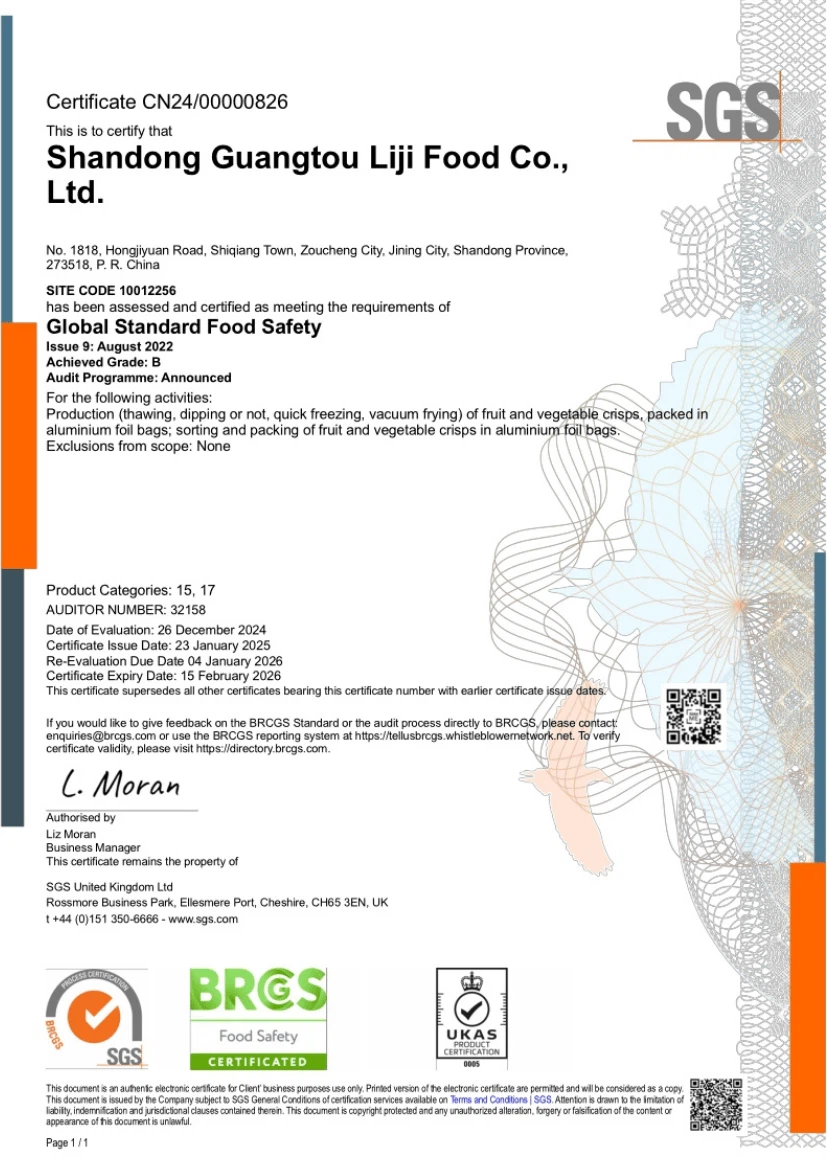
Certificate


productcate-1-1
productcate-1-1
productcate-1-1
productcate-610-868


brc
ISO22000
fda


FAQ
 

Q: What is fruit crisp?

A: Fruit crisp is a dessert made with a layer of fruit filling topped with a crispy, crumbly mixture of flour, sugar, butter, and sometimes oats or nuts.

Q: Can nuts be omitted from the topping for nut allergies?

A: Yes, nuts can be omitted from the topping or replaced with seeds like sunflower seeds or pumpkin seeds for a nut-free version of fruit crisp.

Q: What is the best type of dish to bake fruit crisp in?

A: A baking dish with high sides, such as a ceramic or glass baking dish, is ideal for baking fruit crisp to prevent the juices from overflowing during baking.

Q: Can fruit crisp be served for breakfast?

A: Fruit crisp can be enjoyed as a delicious breakfast treat, especially when made with wholesome ingredients like oats and fresh fruit.

Q: How can I customize fruit crisp to suit dietary restrictions?

A: You can customize fruit crisp to suit dietary restrictions by using alternative sweeteners, gluten-free ingredients, dairy-free options, or adjusting the recipe to accommodate specific dietary needs.

Q: What fruits are commonly used in fruit crisp?

A: Common fruits used in fruit crisp include apples, peaches, berries (such as blueberries, strawberries, or raspberries), cherries, and pears.

Q: How is fruit crisp different from fruit cobbler?

A: Fruit crisp is distinguished by its crispy, crumbly topping, while fruit cobbler typically has a biscuit-like or cake-like topping.

Q: What is the purpose of the crispy topping in fruit crisp?

A: The crispy topping in fruit crisp adds texture, flavor, and contrast to the soft, juicy fruit filling, creating a delightful combination of textures.

Q: Can fruit crisp be made with gluten-free ingredients?

A: Yes, fruit crisp can be made with gluten-free flour or oats to accommodate individuals with gluten sensitivities or dietary preferences.

Q: How can I make the topping for fruit crisp extra crispy?

A: To make the topping extra crispy, you can increase the amount of butter in the topping mixture or bake the fruit crisp at a slightly higher temperature.

Q: Can fruit crisp be made with a combination of fruits?

A: Yes, fruit crisp can be made with a combination of fruits to create unique flavor profiles. Experiment with different fruit combinations for variety.

Q: How can I prevent the fruit filling from becoming too watery?

A: To prevent the fruit filling from becoming too watery, you can toss the fruit with a little flour or cornstarch before assembling the fruit crisp.

Q: Can sugar be adjusted in the fruit crisp recipe?

A: Yes, the amount of sugar in the fruit filling and topping can be adjusted based on personal preference and the sweetness of the fruits used.

Q: Are there vegan options for making fruit crisp?

A: Yes, vegan fruit crisp can be made by using plant-based butter or margarine and ensuring that all ingredients used are free from animal products.

Q: Can fruit crisp be made in individual servings?

A: Yes, fruit crisp can be made in individual ramekins or baking dishes for personalized servings. Adjust the baking time accordingly.

Q: How can I add a hint of citrus flavor to fruit crisp?

A: You can add a splash of lemon or orange juice to the fruit filling or incorporate grated citrus zest into the topping for a refreshing citrus flavor.

Q: Can fruit crisp be made ahead of time?

A: Yes, fruit crisp can be assembled ahead of time and stored in the refrigerator before baking. Simply bake it when ready to serve.

Q: How long does fruit crisp stay fresh?

A: Fruit crisp can be stored in the refrigerator for 2-3 days. Reheat it in the oven or microwave before serving to maintain its crispiness.

Q: Can fruit crisp be frozen?

A: Yes, fruit crisp can be frozen before or after baking. Simply wrap it tightly in foil or plastic wrap and store it in the freezer for up to 3 months.

Q: What are some variations of fruit crisp toppings?

A: Variations of fruit crisp toppings include adding spices like cinnamon or nutmeg, incorporating chopped nuts, or using a combination of oats and flour for the topping.

We're well-known as one of the leading fruit crisp manufacturers and suppliers in China. If you're going to wholesale bulk high quality fruit crisp, welcome to get pricelist and free sample from our factory.

Freeze Dried Strawberry Snack, VF Yellow Peach Crisp, Comprehensive Fruit Crisp